
Coughs are often assumed to be caused by infection, but from the perspective of Traditional Chinese Medicine (TCM), many winter coughs arise due to seasonal influences such as dryness or dampness.
Cold outdoor air and indoor heating can irritate the respiratory tract, making the lungs more vulnerable to both irritation and infection.
In TCM, food and medicine are not strictly separated diet itself is considered a therapeutic tool. A dry or tickly cough is often understood as a sign that the lungs are irritated and lacking moisture. In response, the body may compensate by overproducing mucus.
How Dryness Affects the Lungs
The lungs are lined with delicate mucous membranes that help trap particles and keep the airways working properly. During winter, cold air, central heating, and sudden temperature changes can dry these membranes, leading to symptoms such as:
- Persistent dry or tickly coughs
- Throat irritation
- Hoarseness
- Coughing that worsens at night
Some people naturally have drier mucous membranes, which may be associated with certain autoimmune conditions or an overall constitutional tendency. In these cases, dryness and irritation alone can trigger the cough reflex, even in the absence of infection.
Why Pears Are Used Traditionally
In Traditional Chinese Medicine, pears are described as moistening and gently cooling, with a particular affinity for the lungs. They have long been used to support:
- Dry or unproductive coughs
- Throat irritation
- Lung dryness related to seasonal change
Pears are also traditionally used in conditions involving phlegm, including productive coughs and chest congestion, where they are believed to help soften mucus and support clearer, more comfortable breathing.
Cooking the pear is considered important, as it is thought to enhance its moistening and digestive properties.

The Role of Warming Herbs
Traditional preparations of pears often include warming spices such as ginger or cinnamon. These herbs are used to:
- Improve circulation
- Support immune activity at the mucous membranes
- Provide gentle anti-inflammatory, antispasmodic, and soothing effects
This balance of moistening fruit and warming spices helps prevent excessive cooling while supporting the lungs.
How to Prepare Poached Pears
- Peel and core 1–2 organic pears
- Cover with filtered water
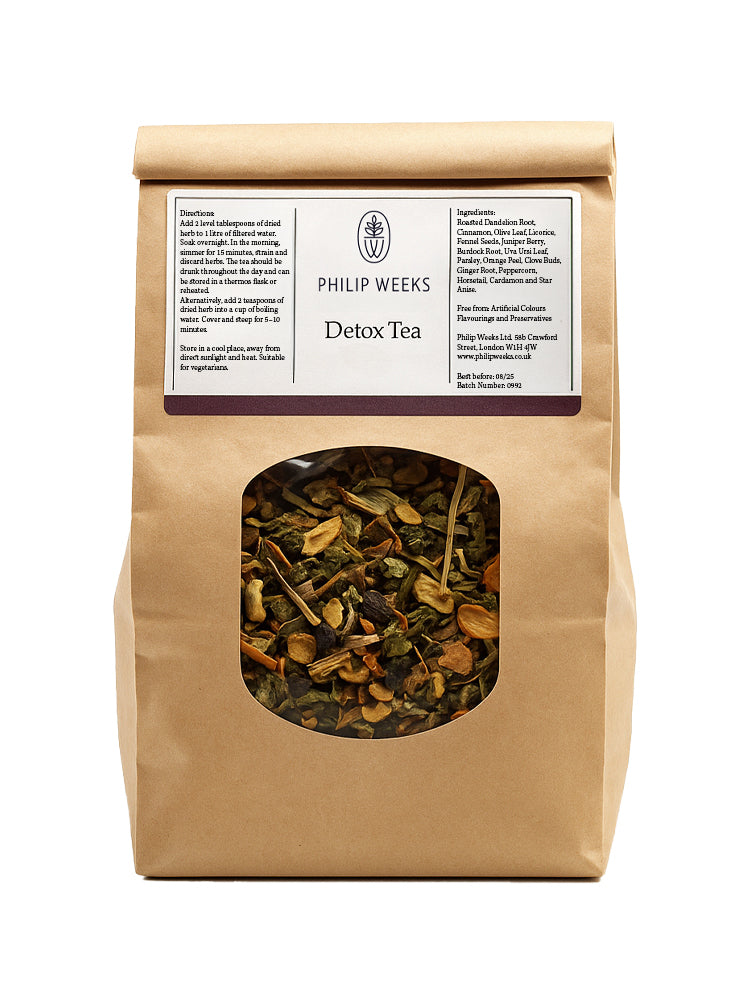
- Add fresh ginger slices and a small piece of cinnamon (If you have my Detox Tea, you can add 1 tablespoon of this blend instead)
- Simmer gently for 15–20 minutes, until soft
- Allow to cool slightly, filter out the added spices and then stir in honey to taste
- Eat warm

Shop Detox Tea
The Bigger Picture
Chinese medicine understands that infections do not occur in isolation. They reflect a combination of internal factors—such as immune strength, the health of the mucous membranes, and digestive function—as well as external influences like weather, climate, and seasonal change.
Ancient medical systems view consider food as being able to support the body in adapting to both internal and external conditions, helping maintain resilience and overall health.
Please note: If you notice an ongoing cough or changes in your breathing, it’s important to speak to your GP or a qualified healthcare professional.
Ancient medical systems view consider food as being able to support the body in adapting to both internal and external conditions, helping maintain resilience and overall health.
Please note: If you notice an ongoing cough or changes in your breathing, it’s important to speak to your GP or a qualified healthcare professional.
References
- Paul IM et al. Effect of honey on nocturnal cough and sleep quality. Arch Pediatr Adolesc Med. 2007.
- Kantar A et al. An overview of the mechanisms of cough. Pulm Pharmacol Ther. 2019.
- World Health Organization. WHO monographs on selected medicinal plants.
- Zhao Z et al. Traditional uses and modern research of pear in respiratory health. J Ethnopharmacol. 2015.