
While we often associate magnesium deficiency with sleep issues, muscle cramps, or anxiety, its role in sensory health, specifically our hearing, is one of the most compelling areas of recent nutritional research.
As our environments become increasingly noisy, understanding how to protect the delicate structures of the inner ear has never been more critical.
The Biology of Noise-Induced Damage
Hearing loss is not always a slow decline of age; it is frequently the result of "acoustic trauma." When we are exposed to loud environments, whether it is a concert, machinery, or even high-volume headphones, the mechanical vibration creates a surge of free radicals in the inner ear.
These free radicals cause oxidative stress that damages the hair cells (cilia) in the cochlea. Once these delicate hairs are destroyed, they do not regenerate. Furthermore, loud noise causes vasoconstriction, reducing the blood flow to the inner ear and depriving it of the oxygen it needs to repair.
Magnesium as a Protective Shield
Magnesium acts as a natural calcium channel blocker and a potent vasodilator. In the context of hearing, it serves three vital functions:
Combating Oxidative Stress
Magnesium helps to neutralize the free radicals generated by loud noise before they can damage the hair cells.
Improving Microcirculation
By keeping the blood vessels open, Magnesium ensures a steady supply of oxygenated blood reaches the inner ear during and after noise exposure.
Regulating Glutamate
Noise trauma causes an over-secretion of glutamate, a neurotransmitter that, in excess, can become "excitotoxic," damaging the nerves that send sound signals to the brain. Magnesium helps regulate this process and stabilizes the nerve signals.
Hearing and the Aging Brain
The importance of maintaining this auditory "shield" extends far beyond sound quality; it is a critical pillar of cognitive health. When hearing loss goes untreated, the brain must work significantly harder to decode sounds, a phenomenon known as cognitive load. This redirection of mental energy can "steal" resources from memory and thinking, leading to faster brain atrophy.
Furthermore, the social isolation that often follows hearing loss, where individuals withdraw from conversations to avoid embarrassment, deprives the brain of the complex stimulation it needs to stay sharp. Research consistently shows that managing hearing health is one of the most significant modifiable risk factors for delaying or preventing dementia.
What the Research Says
Studies have shown that individuals with higher serum magnesium levels are significantly less prone to noise-induced hearing loss. One notable study conducted on military recruits showed that those who received a daily magnesium supplement were significantly less likely to suffer permanent hearing damage after exposure to gunfire compared to the placebo group.
While Magnesium may not reverse age-related "wear and tear" (presbycusis), it is a powerful preventative tool for maintaining the hearing we currently have. It is also increasingly used to support those suffering from tinnitus or ringing in the ears.
In the Clinic...
In my practice, I find that many patients are chronically low in Magnesium due to soil depletion and high-stress lifestyles. When we see patients with tinnitus or sudden sensitivity to sound (hyperacusis), I often look at their mineral status, sometimes using a hair mineral analysis to see what the levels are in the body.
Not all forms of magnesium are created equal. To reach the nervous system and support the delicate pathways of the ear, you need a highly bioavailable form that the body can actually utilize without causing digestive distress.
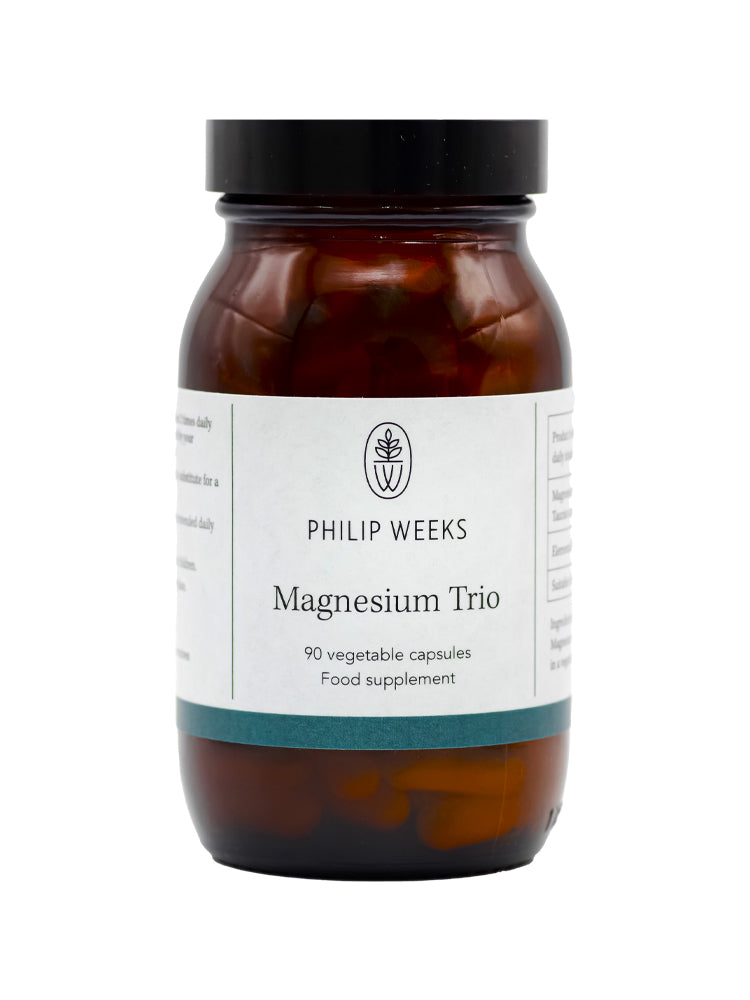
This is why I developed Magnesium Trio. By combining three of the most absorbable forms of magnesium, we ensure the mineral reaches the tissues where it is needed most, providing a foundational layer of protection against the noise of modern life.

Shop Magnesium Trio
References
- Attias J, et al. (1994). Oral magnesium intake reduces permanent hearing threshold shift induced by noise exposure. American Journal of Otolaryngology.
- Cevette MJ, et al. (2011). Magnesium supplementation and tinnitus: A randomized clinical trial. International Tinnitus Journal.
- Sendowski I. (2006). Magnesium therapy in acoustic trauma. Magnesium Research.
- Le Prell CG, et al. (2007). Free radical scavengers and antioxidant enzymes for treatment of auditory trauma.